

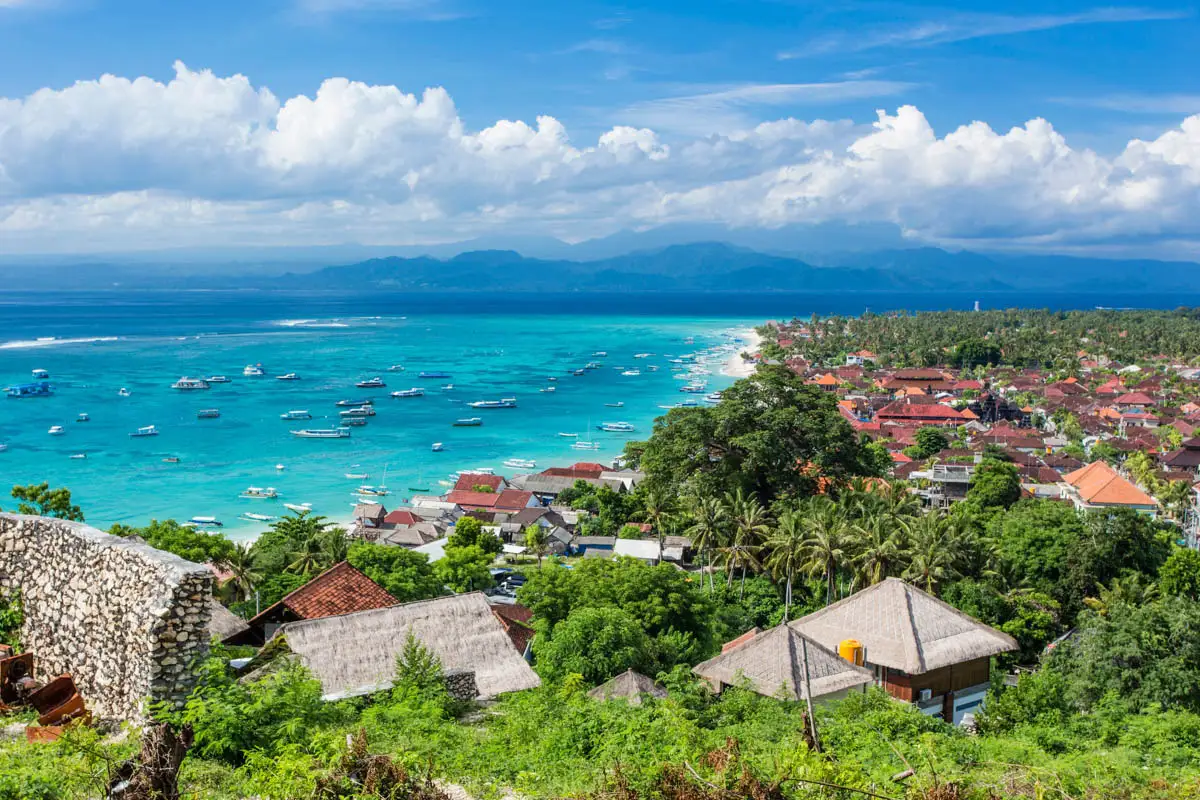
Nusa Lembongan is a small island about 30 minutes by fast boat from Sanur, off Bali’s south-east coast. It is known for manta ray snorkelling, the Devil’s Tear cliffs, mangrove kayaking, quiet white-sand beaches and some of Bali’s best-known reef breaks. You can see the highlights on a day trip, but two to four nights lets you enjoy the island at its own slow pace.
In this guide we cover how to get there, what it costs, the best things to do in Nusa Lembongan, where to surf, where to stay and how to visit as a day trip from our surf and yoga retreat. Nusa Lembongan is one of our favourite Bali destinations, and we have been taking guests across since 2014 on our surf trips beyond the usual crowds.
Nusa Lembongan at a glance
Location
South-east of mainland Bali, part of the Nusa Islands with Nusa Ceningan and Nusa Penida (Klungkung Regency)
Getting there
Fast boat from Sanur, about 30 minutes
Island entry fee
IDR 25,000 per adult, IDR 15,000 per child, on top of Bali’s IDR 150,000 tourist levy
Getting around
Scooter, golf buggy, shared pick-up truck or on foot
Best known for
Manta rays, Devil’s Tear, mangroves, Dream Beach, reef breaks
Best time to visit
April to October (dry season)
Where is Nusa Lembongan?

Nusa Lembongan lies in the Badung Strait, a short boat ride east of Sanur. It is the smallest and most developed of the three Nusa Islands. Nusa Ceningan sits right next to it and is linked by a narrow suspension bridge, known locally as the Yellow Bridge. Nusa Penida, the largest of the three, lies a short boat ride to the south-east.
On a map of Nusa Lembongan, most activity is on the west coast, which faces Bali. Here you find the main village of Jungut Batu, the surf breaks and most hotels. Mushroom Bay sits on the south-west corner. Sandy Bay, Devil’s Tear and Dream Beach are on the south coast, and the mangrove forest covers the north-east.
The island has no airport and very few cars. That is a big part of its appeal: after the traffic of south Bali, the pace on Lembongan feels noticeably slower.
How to get to Nusa Lembongan from Bali
The easiest way to get to Nusa Lembongan from Bali is a fast boat from Sanur. The crossing takes about 30 minutes, and several operators run boats throughout the day.
Fast boat from Sanur
Sanur now has a dedicated fast boat terminal, so you can board from a pier. On Lembongan most boats still land on the beach at Jungut Batu or Mushroom Bay, which means wading through knee-deep water. Wear sandals and keep your bag high.
Prices depend on the operator and whether you book a hotel transfer. Fares on booking platforms range from about EUR 10 to EUR 32 per person one way, with the higher prices including a van pick-up from your hotel in Bali (12go). Tickets for foreign visitors are usually priced higher than for Indonesian residents.
A few tips for the crossing:
- Book ahead in high season (July, August and around Christmas), especially if you want a morning departure.
- Take seasickness tablets if you are prone to it. The strait can be choppy, particularly in the afternoon.
- Cover your luggage. On smaller boats bags often travel on the roof or at the back and can get wet.
- Check the date. No boats run on Nyepi, Bali’s Day of Silence, or on the annual Sea Silence Day (Nyepi Segara). Read more in our guide to Nyepi.
From Canggu, Seminyak, Ubud or Uluwatu
There are no direct boats from the west coast. You drive to Sanur first, which takes roughly 45 to 90 minutes from Canggu depending on traffic. Many boat tickets include a transfer, which saves you arranging a driver.
From Nusa Penida, Lombok or the Gili Islands
- Nusa Penida: around 15 to 20 minutes by local or fast boat.
- Lombok or the Gili Islands: daily fast boats take about 2.5 to 3 hours over open sea. These routes are more often cancelled in bad weather, so morning departures are the safer choice.
Entry fees and tourist levies
Foreign visitors to the Nusa Islands pay a Tourist Retribution Fee of IDR 25,000 per adult and IDR 15,000 per child. One payment covers Lembongan, Ceningan and Penida. This is separate from the IDR 150,000 Bali tourist levy that all international visitors pay for the province (The Bali Sun). In 2026 the Klungkung regency moved the island fee to online and cashless payment, so ask your boat operator how to pay before you travel.
Since August 2026, Nusa Penida also charges IDR 25,000 per person at its main attractions such as Kelingking Beach and Crystal Bay. On Lembongan, expect a small cash entrance fee at Devil’s Tear.
Getting around Nusa Lembongan
Most visitors get around Nusa Lembongan by scooter. Rental costs about IDR 75,000 to 100,000 per day. Roads are narrow, hilly and patchy in places, so only ride if you are confident on a scooter and wear a helmet.
Other options:
- Golf buggies can be rented through hotels and are a comfortable way to see the whole island in a day.
- Shared pick-up trucks work as taxis. Agree the price before you get in.
- Restaurant and hotel pick-ups: many beach clubs and restaurants offer free transfers for dinner guests.
- Walking: the coastal paths link Jungut Batu, Mushroom Bay and Sandy Bay, and many sights are walkable from your accommodation.
Nusa Ceningan can only be reached by scooter, bicycle or on foot via the Yellow Bridge.
Best things to do in Nusa Lembongan
From cliffs and mangroves to manta rays, these are the best things to do in Nusa Lembongan and its sister island.
1. Watch the waves at Devil's Tear

Devil’s Tear is a rocky stretch of coast on the south-west side of the island, next to Dream Beach, where waves crash into limestone caves and shoot spray high into the air. It is the island’s most famous sight.
- Go at high tide, when the waves are strongest. Check a tide app before you leave.
- Stay for sunset. The tide pools reflect the sky and the spray often forms small rainbows on sunny days.
- Keep well back from the edge. The waves are unpredictable and people have died here after being swept off the rocks. Do not swim, and skip the cliff jumps when there is a big swell.
- Wear shoes with grip, as the rocks are sharp.
- Bring cash for the small entrance fee (around IDR 25,000).
Tour groups tend to stay near the car park. Walk a few minutes along the coast towards Sandy Bay and you will have much more space.
2. Snorkel with manta rays
A snorkel trip from Nusa Lembongan to Manta Bay or Manta Point, off the south-west coast of Nusa Penida, is the number one reason many people visit. Reef manta rays gather here to feed and visit cleaning stations, and their wingspan can reach four to five metres.
Most half-day tours visit three spots, typically Manta Bay, Crystal Bay or Gamat Bay, and Mangrove Point. A shared trip from Lembongan costs around EUR 20 to 30 and lasts three to four hours. Some tours also include lunch and a mangrove boat ride.
Good to know:
- Sightings are likely but not guaranteed. Rough seas can mean the boat skips Manta Bay.
- Morning trips usually have calmer water and better visibility.
- The water can be surprisingly cold, especially between July and October, so a shortie wetsuit helps.
- Currents are strong around the Nusa Islands. Always snorkel with a guide and use the life jacket if you are not a strong swimmer.
3. Dive with mantas and mola mola
The Nusa Islands are one of Indonesia’s best-known dive areas, with more than 20 dive sites. Manta encounters happen year-round, and from roughly June to October divers come for the mola mola, or ocean sunfish, which rise from deep water to cleaning stations at sites like Crystal Bay. Many sites have strong drift currents, so pick a dive centre that matches the sites to your experience level.
4. Kayak or paddleboard through the mangroves
The north-east of Nusa Lembongan is covered in mangrove forest. You can explore it by kayak, stand-up paddleboard or a traditional wooden boat poled by a local guide. Tours start from about EUR 9 for an hour. Go at high tide, when the channels are deep enough to paddle. It is a calm, shaded activity and a good choice on a day when the sea is too rough for snorkelling.
5. Cross the Yellow Bridge to Nusa Ceningan

Nusa Ceningan is a small, hilly island connected to Lembongan by the Yellow Bridge, which only takes scooters, bicycles and pedestrians. With almost no cars, Ceningan feels even quieter than Lembongan. Highlights include:
- Blue Lagoon: a cliff-lined cove with deep turquoise water. It is a viewpoint, not a swimming spot.
- Mahana Point: a cliff-top warung with jumping platforms. Only jump in calm conditions and check the depth with the staff first.
- Secret Beach: a small sandy bay on the south-east coast with clear water and usually few visitors.
- The interior: bumpy back roads lead past temples, seaweed farms and views across to Penida.
6. Relax at Dream Beach and Sandy Bay
Dream Beach is a small cove of white sand framed by cliffs on the south coast. It looks perfect for swimming, but waves and rip currents are often strong, so enjoy it from the sand or a pool at one of the cafés above the beach. Arrive early, as it gets busy in the afternoon.
Sandy Bay, a short walk away, is quieter and has a beach club with an infinity pool. It is one of the best sunset spots on the island.
7. See the sunset from Jungut Batu or Panorama Point
Jungut Batu, the longest beach on the island, faces west towards Bali. On clear evenings you can see Mount Agung behind the boats and surf breaks. For a view from higher up, ride to Panorama Point in the hills, or take a beanbag at one of the cliff-top bars.
8. Learn about seaweed farming
Seaweed farming was the main source of income on Lembongan and Ceningan before tourism grew. You can still see the farm plots in the shallow channel between the two islands at low tide. It is a reminder that this is a living island community, not just a resort.
Surfing in Nusa Lembongan
Nusa Lembongan has several well-known reef breaks along its west coast, facing Bali. They work best in the dry season, from April to October, when south-west swells meet the south-east trade winds.
Surf spot
Wave
Best for
Watch out for
Playgrounds
A-frame peak, lefts and rights
Intermediate
Crowds, sharp reef
Lacerations
Fast, hollow right
Advanced
Very shallow reef
Shipwrecks
Right-hander off Jungut Batu
Intermediate to advanced
Shallow reef, seaweed farm stakes
Razors
Left
Intermediate
Reef and currents
Ceningan Point (Mahana)
Left-hand point break
Intermediate
Picks up more swell, can be messy
A few honest notes:
- These are reef breaks, not beginner beaches. On small days Playgrounds can suit confident beginners with a guide, but most first-timers will progress faster on Bali’s sandy beach breaks. See our guide to the best surf spots in Bali for beginner options.
- Tide matters. Most spots are best around mid tide. At low tide the reef can be dangerously close. Our guide to how tides affect surfing explains why.
- Take a boat. You can paddle out from Jungut Batu, but local boat taxis to the breaks cost only a few euros and save a long paddle back against the current.
- Respect the line-up. Playgrounds and Lacerations get busy. Brush up on surf etiquette before you go.
If you are an experienced surfer, Lembongan pairs well with the Bukit reefs. Read our guide to the best advanced surf spots in Bali.
The best beaches on Nusa Lembongan
Beach
Good for
Swimming
Mushroom Bay
Calm water, beach clubs, families
Yes, usually calm
Jungut Batu
Sunsets, views of Mount Agung, restaurants
Possible at high tide, shallow at low tide
Dream Beach
Scenery, photos, cliff-top cafés
Often unsafe due to waves and rips
Sandy Bay
Quiet afternoons and sunsets
Only in calm conditions
Secret Beach (Ceningan)
Escaping the crowds
Yes, when calm
Mushroom Bay is the best choice for an easy swim. Day-trip boats arrive around midday, so go early or late in the afternoon for a quieter beach.
Nusa Lembongan or Nusa Penida?
Choose Nusa Lembongan for a relaxed stay with beaches, snorkelling and easy logistics. Choose Nusa Penida for dramatic viewpoints like Kelingking Beach.
Nusa Lembongan
Nusa Penida
Size
Small, easy to explore in a day
Much larger, long drives between sights
Roads
Narrow but manageable
Steep and rough, a driver is recommended
Atmosphere
Laid-back village, cafés, surf
Rugged, more remote, very busy viewpoints
Best for
Snorkelling, surfing, beaches, relaxing
Clifftop viewpoints, photography, diving
Many travellers stay on Lembongan and take a day trip to Penida. It is a 15 to 20 minute boat ride, and leaving early helps you beat the crowds at Kelingking. Most snorkel trips from Lembongan already visit Penida’s best reefs.
Best time to visit Nusa Lembongan
The best time to visit Nusa Lembongan is the dry season, from April to October, when seas are calmer, visibility for snorkelling is better and the west coast surf breaks are at their best. July and August are the busiest months.
The rainy season, from November to March, brings short heavy showers and rougher crossings, but also fewer visitors and lower prices. Rain rarely lasts all day. If you are unsure, read our honest take on Bali’s rainy season. Surfers can find more detail in our guide to the best time to surf in Bali.
Season
Weather
Sea and snorkelling
Surf on the west coast
April to October
Dry, sunny, cooler evenings
Calmer, clearer, colder water July to October
Best season
November to March
Humid with tropical showers
More choppy days, some tours cancelled
Less consistent
Visiting Nusa Lembongan from Pelan Pelan Bali

Our retreat is in Cemagi, on Bali’s quiet west coast near Canggu. A day trip to Nusa Lembongan is one of the excursions we organise for guests, and it is a good change of scene after a few days of surf lessons and yoga.
A typical day includes the boat from Sanur, snorkelling or diving, a row in a traditional canoe and, for surfers who are ready, a session on one of the island’s reef breaks with a guide. We plan the trip around the tide and the swell, so you go on a day when conditions suit what you want to do.
Want to combine island trips with daily surf coaching? Our surf retreat in Bali includes accommodation, meals and lessons, and our team helps you plan excursions like Nusa Lembongan.
Practical tips for Nusa Lembongan
- Bring cash. There are only a few ATMs, around Jungut Batu and Mushroom Bay, and they are not always working. Card payments often come with a 3 to 5 percent surcharge.
- Check the tides before visiting Devil’s Tear, the mangroves or the surf breaks.
- Pack reef shoes and reef-safe sunscreen. The shoreline is rocky in many places and the coral is fragile.
- Respect the ocean. Currents around the Nusa Islands are strong. Swim only at calm beaches and listen to local advice.
- Dress respectfully in the villages and at temples, with shoulders and knees covered.
- Check the calendar for Nyepi and Sea Silence Day, when no boats run and water activities are closed.
Frequently asked questions
Is Nusa Lembongan worth visiting?
Yes. Nusa Lembongan is worth visiting if you want clear water, manta ray snorkelling, quiet beaches and a slower pace than south Bali. It is small enough to explore in a day yet has enough cafés, surf and diving for a longer stay. It is busiest in July and August, so visit early in the day or outside peak months for a calmer experience.
Can you do Nusa Lembongan as a day trip from Bali?
Yes. Fast boats from Sanur take about 30 minutes, so a day trip is easy. Many tours include hotel pick-up in Bali, a snorkel trip, lunch and an island tour. Leave on an early boat and book the return for the late afternoon. If you want to see Devil’s Tear at sunset, you will need to stay the night.
Is Nusa Lembongan the same as Nusa Penida?
No. They are separate islands. Nusa Lembongan is smaller and more developed for tourism, with a relaxed village feel. Nusa Penida is much larger and more rugged, known for viewpoints such as Kelingking Beach. Nusa Ceningan, the third island, is linked to Lembongan by the Yellow Bridge. All three belong to Klungkung Regency.
Do you need to pay to enter Nusa Lembongan?
Yes. Foreign visitors pay a Tourist Retribution Fee of IDR 25,000 per adult and IDR 15,000 per child, which covers all three Nusa Islands. It is separate from the IDR 150,000 Bali tourist levy. Payment has moved online and cashless, so check with your boat operator how to pay before you leave Sanur.
Is it safe to swim at Nusa Lembongan?
It depends on the beach. Mushroom Bay is usually calm and good for swimming. Dream Beach, Sandy Bay and Devil’s Tear often have powerful waves and rip currents, and swimming there is not recommended. Around the islands, currents can be strong, so always snorkel with a guide and follow local advice.
Can beginners surf in Nusa Lembongan?
Nusa Lembongan’s breaks are all over coral reef, so they suit intermediate and advanced surfers best. Confident beginners can sometimes surf Playgrounds on small days with a guide. If you are just starting out, Bali’s sandy beach breaks are a safer place to learn your basics before trying the reefs.
Planning your trip to Nusa Lembongan
Nusa Lembongan gives you a lot within a short boat ride: manta rays, mangroves, wild cliffs and quiet beaches, without the traffic of mainland Bali. Go in the dry season for the calmest seas, bring cash, check the tides and give yourself at least one night if you can.
If you would like to explore the Nusa Islands as part of a longer Bali stay, have a look at our surf and yoga retreat packages. We are happy to help you plan the trip.